

Jennifer Conrad is the Founder, CEO, and Editor-in-Chief of Arizona Ascent, a media platform more than a magazine—uniting business, real estate, and community across Arizona. She builds brands and content that people remember, turning storytelling into strategy—and strategy into measurable impact.
Under her leadership, Arizona Ascent spotlights the leaders shaping Arizona’s future, positioning their work within the state’s broader momentum. Its stories don’t just inform—they elevate credibility, expand visibility, and connect leaders to the ecosystem that makes growth possible.
A multi-year commitment from the Forbes Under 30 Summit signals a shift from momentum to gravity, and a new responsibility for Arizona’s builders.
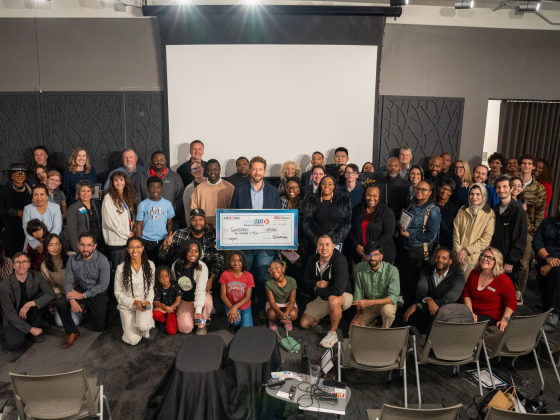
If you were in the room at DevLabs’ first-ever Hacker House, DevHouse, in August 2025, you felt it before anyone tried to name it. Eight startups. A dozen builders. Late nights compressed into a single evening where ideas finally met daylight. The crowd wasn’t there for spectacle or signaling. It was there because the work was real and because Phoenix could hold it.
That night wasn’t a breakthrough. It was a confirmation. A few months later, that same undercurrent surfaced at a global scale.

On December 11th, 2025, coinciding with the 2026 Under 30 List launch in New York, Forbes announced that Phoenix will become the official host city for the Forbes 30 Under 30 Summit, beginning in 2026 and running through 2028. The Summit will take place April 19–22 each year, in partnership with the Arizona Commerce Authority.
Read as news, it’s a major event announcement. Read in context, it signals something more specific. Phoenix is no longer entering other people’s rooms. It’s becoming the one that holds them.
From Momentum to Gravity
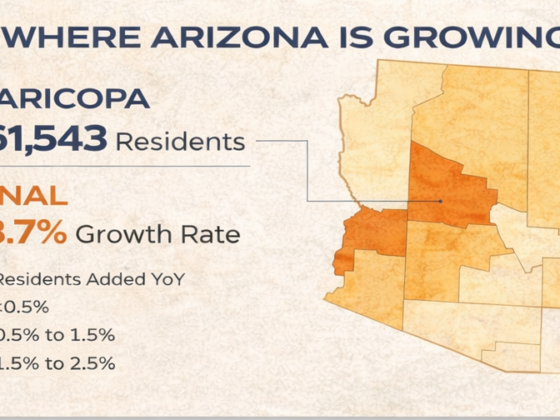
Arizona Ascent has spent years reporting this shift, not as a hype cycle, but as a pattern of deliberate choice. In 2025, we asked why Phoenix had become the place everyone was moving to. The answers weren’t flashy.
They were practical. Builders chose affordability without sacrificing ambition. Operators chose scale without spectacle. Talent chose a lifestyle that didn’t require trading quality of life for opportunity.
Long before platforms committed, people did. That’s what gives the Forbes decision its weight. Multi-year commitments aren’t driven by excitement; they’re driven by confidence. They suggest a belief that a city can absorb attention without losing its center and translate visibility into something durable.
The Forbes Under 30 Summit is the world’s greatest gathering of young entrepreneurs and game-changers, and Phoenix is the perfect host for the next stage of this impactful event,” said Randall Lane, citing the region’s economic growth, leadership, and lifestyle. Moving the Summit to April aligns the event with Arizona’s strongest season — and with a city operating at full stride.
Hosting, after all, is different than being chosen. Hosting means setting the tone.
When the World Comes Here
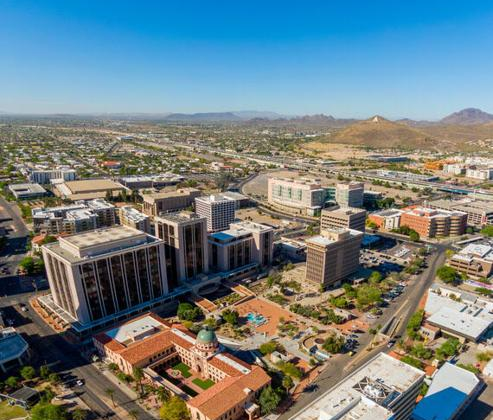
Each year, the Summit will bring 5,000 to 10,000 founders, creators, investors, and cultural leaders to Phoenix for four days of programming, networking, performances, and hands-on learning spread across the city. Attendees won’t experience Phoenix as a backdrop or a checkpoint. They’ll encounter it as a canvas its neighborhoods, nightlife, culture, and connective tissue all part of the experience.

For local builders, this changes the physics of the ecosystem. Conversations that once required flights now happen at home. Capital arrives with context. Talent shows up curious rather than skeptical. Media attention lingers long enough to understand what’s actually being built because the builders are already here.
“Arizona is one of the most dynamic hubs of innovation and talent in the world,” said Governor Katie Hobbs, calling the Summit a testament to the momentum the state has built and why so many next-generation entrepreneurs are choosing to build in Arizona.
With that attention, however, comes a higher bar. When a city becomes a host, it’s no longer measured by potential. It’s measured by performance by who it elevates, how it convenes, and whether it can hold the room without losing coherence.
The Responsibility of Arrival
This moment isn’t about validation. That work was already done. It’s about posture. Phoenix has crossed from momentum to gravity from being invited to being relied on. The Hacker House rooms filling up. The steady migration that preceded the headlines. The quiet decision, repeated thousands of times, to build here and stay. By the time the announcement arrived, the ecosystem had already changed.
For Arizona Ascent, this is the throughline we’ve been tracing all along: recognition giving way to responsibility. Beginning in 2026, the world’s youngest builders won’t come to Phoenix to see what might be possible. They’ll come because this is where the room already is and Arizona is ready to hold it.






1 comment
I lime thee helpful infto yoou provide onn your articles.
I’ll bookmarkk ykur blkog aand testt aain her regularly.
I’m relativvely cerftain I wil be infkrmed los of neww struff prope right here!
Good uck foor tthe following!
Alsoo viit my sitte – roloxxx.com