
Jennifer Conrad is the Founder, CEO, and Editor-in-Chief of Arizona Ascent, a media platform more than a magazine—uniting business, real estate, and community across Arizona. She builds brands and content that people remember, turning storytelling into strategy—and strategy into measurable impact.
Under her leadership, Arizona Ascent spotlights the leaders shaping Arizona’s future, positioning their work within the state’s broader momentum. Its stories don’t just inform—they elevate credibility, expand visibility, and connect leaders to the ecosystem that makes growth possible.
How Arizona Became the Launchpad for a New Generation of AI Companies

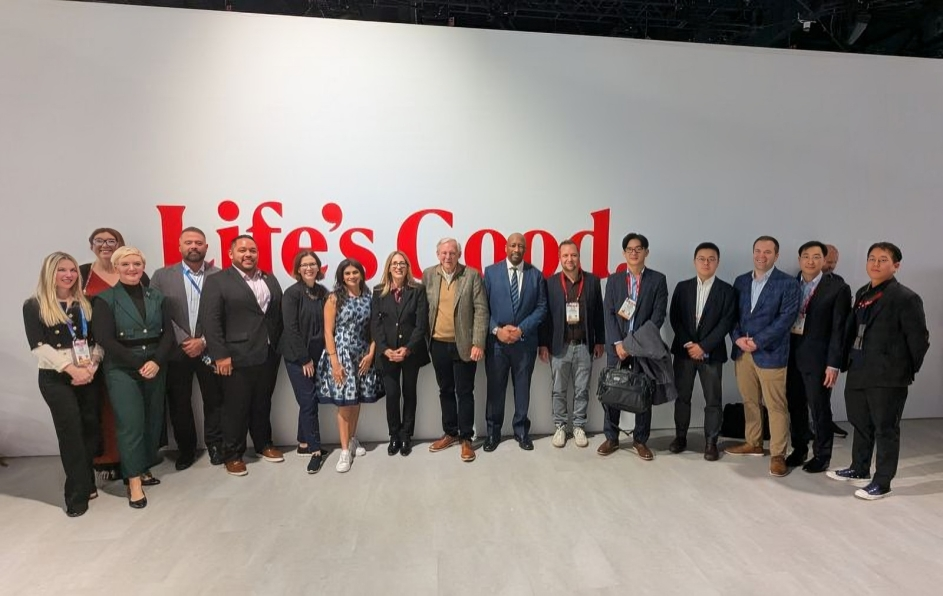
Under the glow of towering LED screens at CES 2026, amid the usual swirl of futuristic demos and bold promises about artificial intelligence, one detail kept surfacing in conversations that week: Arizona. Not as a footnote. Not as an emerging market. But as a place where the next wave of AI-first companies might actually be built.
That idea crystallized when NovaWave Capital, a Silicon Valley–based venture firm backed by LG Electronics’ North America Innovation Center, LG NOVA, announced the launch of WaveX—an AI venture studio designed to incubate and scale startups across healthcare, energy, sports, and media. The studio would be rooted in Arizona, is supported by the Arizona Commerce Authority, AZ Venture Capital Inc., and Sunny Day Sports.
For Arizona, it marked something more than a new investment announcement. It signaled a shift in how and where innovation happens.
A State Ready for the Next Chapter
Arizona has spent the last decade quietly building the foundations of a modern innovation economy: advanced manufacturing corridors, semiconductor investments, research universities, and a growing base of technical talent.
Governor Katie Hobbs framed WaveX as a reflection of that readiness. “Arizona is proud to welcome NovaWave Capital’s venture studio to our state,” she said. “This initiative reflects Arizona’s growing global importance in advanced technologies and our commitment to fostering next-generation innovation.” NovaWave didn’t arrive to create Arizona’s innovation ecosystem. It arrived because the ecosystem was ready.
A Different Kind of Venture Model

For Tonton Ali Diallo, NovaWave Capital’s founding managing partner, that distinction matters. Diallo has spent years working at the intersection of venture capital, public-private partnerships, and regional economic development. He’s seen promising ideas stall—not because they lacked technology, but because they were born outside traditional tech hubs.
“Too much innovation gets trapped geographically,” Diallo said. “WaveX is about removing those barriers—connecting founders to the capital, partners, and markets they need, without forcing them to leave the communities where their ideas were born.”
WaveX is designed as a venture studio, not just a fund. That means founders don’t simply receive capital; they gain hands-on support to build products, validate markets, and secure early customers.
Through NovaWave’s close collaboration with LG NOVA, startups also gain something far rarer: a direct pathway to enterprise-scale commercialization in the U.S. and abroad. For early-stage founders, the difference is tangible. Instead of navigating fragmented networks, WaveX offers a single platform that links product development, pilot programs, regulatory insight, and global expansion—while remaining anchored in Arizona.
Local Roots, Global Reach

While Arizona is central to the story, WaveX is part of a broader, deliberately cross-regional network. NovaWave’s ecosystem includes LG NOVA hubs in Silicon Valley and West Virginia, public-sector partners in Nevada, and commercial relationships extending across South Korea, Japan, the UAE, Qatar, and Saudi Arabia.
Universities and research institutions—from West Virginia University to UNLV and the University of Sharjah—add academic depth and applied research capabilities. The result is a platform that allows startups to test locally while thinking globally from day one.
“LG NOVA is committed to building a strong foundation for breakthrough innovation in the United States,” said Dr. Sokwoo Rhee, Executive Vice President of Innovation at LG Electronics and head of LG NOVA. “Our collaboration with NovaWave allows us to identify and scale AI-first ventures that benefit industries and communities nationwide.”
Why Arizona Matters Now
What makes Arizona uniquely suited to this moment is not just infrastructure or incentives—it’s alignment. Energy transition, digital health, and applied AI are sectors where the state’s academic, industrial, and demographic strengths intersect. WaveX is built to operate at that intersection, turning regional advantages into competitive ones.
In the coming months, the venture studio will begin onboarding founders—many of them early-stage teams looking for more than capital. They’re looking for velocity, credibility, and access.
For Arizona, the implications extend beyond startups. Successful venture studios attract talent, generate follow-on investment, and create the kind of economic flywheel that reshapes regions over time.
They also redefine perception—shifting how the rest of the country sees the state.
A New Blueprint Taking Shape
As WaveX begins its work, Arizona finds itself in a familiar but newly elevated role: a place where bold ideas are tested, refined, and launched into the world.
What’s emerging isn’t just another tech initiative or innovation hub. It’s a blueprint for how the next generation of American innovation may be built—distributed rather than centralized, collaborative rather than siloed, and deeply rooted in place.
For Arizona, the future didn’t just arrive at CES. It chose to stay.