
Jennifer Conrad is the Founder, CEO, and Editor-in-Chief of Arizona Ascent, a media platform more than a magazine—uniting business, real estate, and community across Arizona. She builds brands and content that people remember, turning storytelling into strategy—and strategy into measurable impact.
Under her leadership, Arizona Ascent spotlights the leaders shaping Arizona’s future, positioning their work within the state’s broader momentum. Its stories don’t just inform—they elevate credibility, expand visibility, and connect leaders to the ecosystem that makes growth possible.
How an Arizona entrepreneur learned to build businesses by understanding what people notice, trust, and share.

Todd Searle doesn’t talk about success the way most founders do. There’s no fixation on exits or valuations, no tidy origin story polished for pitch decks. Instead, he talks about patience about repetition, momentum, and the discipline of staying in motion long after the initial excitement wears off. It’s an approach that feels almost countercultural in an era obsessed with speed. And yet, it’s precisely what has allowed Searle to build across industries retail, media, private equity, development, education without losing coherence or control.
At the center of everything is a single belief: if you understand how people connect to stories, you can build almost anything.
Growing Up Where Business Was Personal
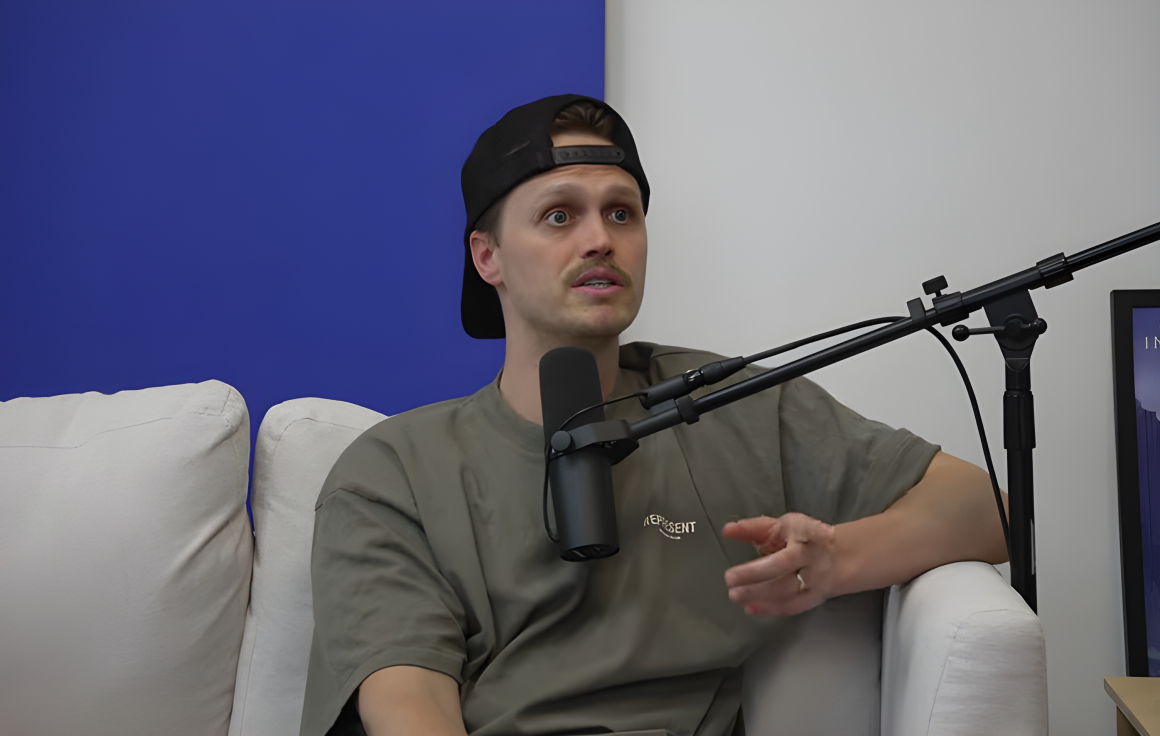
Searle was born and raised in Arizona’s East Valley, in a version of Gilbert that barely resembles what exists today. Cotton fields stretched behind neighborhoods. Growth felt gradual, not inevitable. Community wasn’t something you optimized it was something you participated in.
That environment shaped him early, largely through watching his father run a business the old-fashioned way. For more than 30 years, Searle’s father operated Olive Ave, a brick-and-mortar jewelry store in Mesa.
People didn’t just come in to buy engagement rings or anniversary gifts. They came back year after year. Relationships, not transactions, sustained the business.
“That was my first exposure to how businesses actually last,” Searle says. “It wasn’t about volume. It was about trust.” He carried that lesson with him to Arizona State University, where he studied accounting and finance before entering private equity.
The work taught him discipline—how deals are structured, how risk is priced, how capital moves—but something still felt incomplete. “I understood the math,” he says. “But I was always more interested in what made people choose something.”
When a Store Closes
The moment that changed everything didn’t come from finance or media. It came from family. After three decades behind the counter, Searle’s father made a decision that surprised many longtime customers. He closed the jewelry store and moved south of Tucson to open a boys’ ranch for troubled teens, committing his full attention to mission-driven work.
The storefront was gone. The customer base wasn’t. Phone calls kept coming—repairs, cleanings, anniversary upgrades. People weren’t attached to the building; they were attached to the relationship.
Searle and his brother stepped in to manage the overflow, initially running appointments out of a small office while both maintained full-time jobs. But it quickly became clear that the model wasn’t scalable.
“So we asked a simple question,” Searle says. “What if we didn’t try to recreate the store?” Instead, they launched Olive Ave Jewelry online.
They started on Etsy with modest expectations, simply to test whether demand still existed without a physical storefront. It did—immediately. The first year generated roughly $200,000 in revenue, far exceeding expectations. When they launched their own website, the business multiplied again.
Employees were hired. Operations formalized. What began as a stopgap solution evolved into a full-scale company. Yet the lesson that stuck with Searle wasn’t about e-commerce. We didn’t change the product,” he says. “We changed how people found us.”
Learning How Attention Actually Works
As Olive Ave Jewelry grew, Searle became increasingly absorbed by marketing—not as a tactic, but as a system. Why did certain messages resonate? Why did others disappear without impact? That curiosity pulled him back into a lifelong passion: gaming.
Having grown up competing in games like Halo and RuneScape, Searle understood the emotional gravity of digital worlds long before “esports” became popular. Alongside partners, he began experimenting with content creation in gaming culture, eventually helping build what would become Built by Gamers. The early days were messy. Some ideas failed publicly. Others exploded unexpectedly.
One video alone drove over a million subscribers—an overnight success that took years of experimentation to earn. Behind the scenes, Searle and his team weren’t guessing. They were studying behavior.
They identified a repeatable framework for why people share content at all—rooted in behavioral psychology rather than trends. The structure centered on six elements: Social Currency, Triggers, Emotion, Practical Value, Proof, and Stories. The insight was deceptively simple. “If you make someone feel something and give them something useful,” Searle says, “they’ll pass it on.”
They tested the framework relentlessly—first with gaming content, then movies, pop culture, folklore, and eventually industries most founders assume can’t succeed on social media. Roofing. Construction. Pest Control. Jewelry. “The product doesn’t matter as much as people think,” Searle says. “The story does.”
Choosing Restraint Over Exploitation

As Built by Gamers gained traction, monetization opportunities flooded in. Sponsorships. Ads. Brand deals. The path to rapid revenue was obvious. Searle resisted it. Rather than turning the platform into a billboard, he treated it as a laboratory. The real asset wasn’t the audience—it was the system that created consistent connection.
Monetizing trust too aggressively, he believed, would undermine the brand’s foundation.That restraint shaped the next phase of his career.
Through Searle Management, he began applying the same storytelling and creative discipline across a portfolio of companies, often in exchange for equity rather than fees.
Arizona, in his view, has everything it needs: population growth, economic diversity, and a massive talent pipeline through institutions like ASU. What’s missing isn’t opportunity—it’s narrative confidence. “If you don’t tell your own story, someone else will tell it for you,” he says.
The work spanned private equity, development, consumer brands, and service-based businesses. It wasn’t marketed. It spread quietly, through results and relationships. “I only want to work on things where incentives are aligned,” Searle says. “Short-term wins don’t interest me.”
Today, he oversees creative and strategic direction across multiple ventures, ensuring growth doesn’t come at the expense of identity.
Why Arizona Is the Point
With portable skills and national reach, Searle could have left Arizona long ago. He didn’t. Part of that is personal—his family, his history, his roots. But part of it is conviction. “I don’t understand why success is always framed as leaving,” he says.
That belief has drawn Searle into conversations around education and workforce development, including work with University of Silicon Valley, where experiential learning and polymath skill sets challenge traditional academic models.
In a world reshaped by AI and automation, he believes adaptability—not credentials—will define the next generation of builders.
The Domino Principle
Ask Searle what holds most people back, and his answer is immediate. “They wait.”
They wait for certainty. For clarity. For permission. Meanwhile, momentum never starts.Searle believes big visions are essential—but dangerous if they paralyze execution. His antidote is what he calls the domino principle: break the dream into the smallest possible action and do it today. One post.
One experiment. One conversation.“You don’t need the whole path,” he says. “You need the first domino.” He’s failed more times than he can count. Most of his ideas never became companies. But each attempt sharpened his understanding of what works and what doesn’t. Success, in his view, isn’t a number. It’s alignment. The ability to build a life that resembles the movie playing in your head, not someone else’s highlight reel.
And as Arizona continues to define its next chapter, Todd Searle’s career offers a quiet blueprint: stay rooted, move deliberately, and build things that last.








10 comments
References:
Brantford casino poker pad.stuve.uni-ulm.de
References:
Video slot machines youtube.com
References:
Blackjack for dummies undrtone.com
References:
River rock casino ondashboard.win
References:
Capitol casino warblog.hys.cz
References:
Soboba casino onlinevetjobs.com
References:
Slots machines neolatinswiki.site
References:
Hooters casino las vegas freudwiki.site
References:
Mardi gras casino florida hedgedoc.info.uqam.ca
References:
Casino nb spa school-of-safety-russia.ru