
Jennifer Conrad is the Founder, CEO, and Editor-in-Chief of Arizona Ascent, a media platform more than a magazine—uniting business, real estate, and community across Arizona. She builds brands and content that people remember, turning storytelling into strategy—and strategy into measurable impact.
Under her leadership, Arizona Ascent spotlights the leaders shaping Arizona’s future, positioning their work within the state’s broader momentum. Its stories don’t just inform—they elevate credibility, expand visibility, and connect leaders to the ecosystem that makes growth possible.
Inside Venture Start, the six-week accelerator where clarity, community, and customer truth mattered more than speed and why it worked.
On the final night of Venture Start, the room didn’t feel like a competition. It felt like a culmination. Founders adjusted slides. Families filled chairs. Judges leaned in. There was laughter before the first pitch, quiet nerves behind the scenes, and the unmistakable energy of people who had spent weeks building something together not just ventures, but confidence.
Six weeks earlier, these founders arrived with ideas. By Pitch Day, they arrived with clarity. Venture Start, a six-session accelerator launched by the Arizona Commerce Authority in partnership with the J. Orin Edson Entrepreneurship + Innovation Institute at Arizona State University.
The program was designed to help early-stage startups validate ideas, define target markets, refine go-to-market strategies, and begin acquiring early customers. Delivered through a hybrid format combining live interactive sessions, self-paced modules, and shared tools the program brought founders from across the state into a single, connected cohort.
As the weeks progressed, it became clear the program was doing more than teaching frameworks. It was creating a space where founders felt safe enough to think out loud and strong enough to sharpen their thinking together.
Behind that tone was Khandle Hedrick, who provides consulting support for programming and founders at the J. Orin Edson Entrepreneurship + Innovation Institute .
From the start, the emphasis wasn’t just on outcomes, but on curiosity, experimentation, and shared momentum.
“We created a space where founders felt brave enough to ask big questions, try new tools, and most importantly support each other,” reflected Kristin Slice, Director of Community Entrepreneurship, after the cohort wrapped. “This is the magic.”
That magic showed up week after week. Founders logged in from wherever they could—home offices, libraries, shared workspaces. They pressure-tested ideas, shared templates, and returned each session with sharper thinking. More than once, insight arrived late at night and by morning, it had become part of the collective progress. By Pitch Day, the evolution was visible.
The Pitches
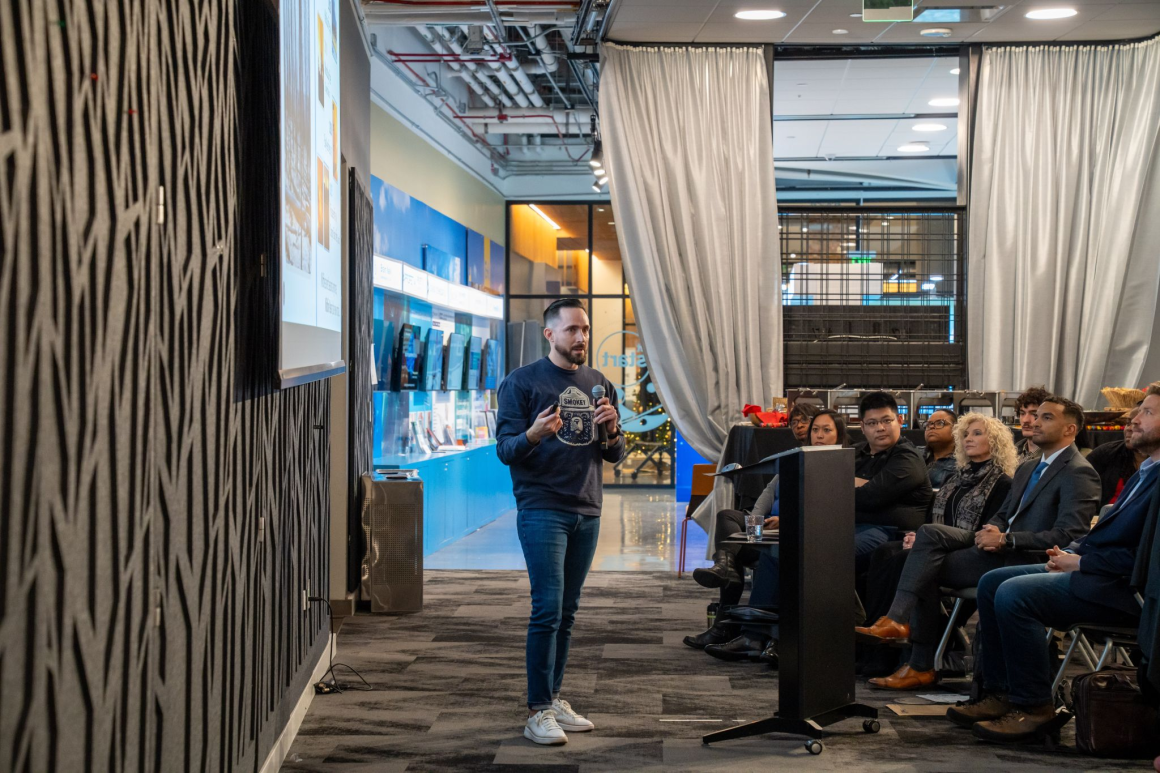
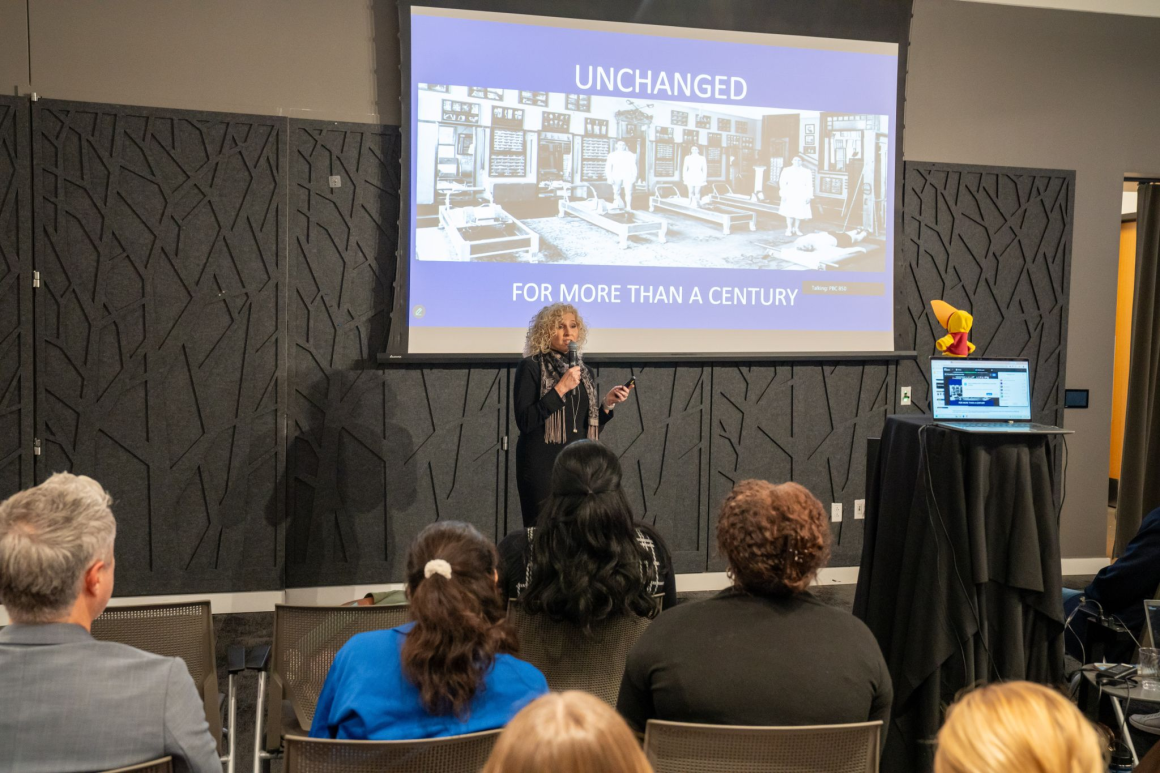
The six finalists who took the stage didn’t overreach. They articulated value clearly, grounded their ideas in customer research, and outlined realistic paths for growth.
- Trish M. presented a redesigned Pilates reformer for medical settings and studio growth.
- Kris Saunders presented drone technology focused on forest fire prevention.
- Demi G. pitched a swimsuit sizing innovation designed to address a persistent consumer challenge.
- Jinzhao Guo introduced a novel lithium-battery safety method developed through ASU research, earning strong support from the room.
- James Vossah shared cybersecurity tools built for manufacturers.
And Kyle Montgomery pitched Generous, a tool that organizes kids’ gift lists so parents no longer chase dozens of links. The common thread wasn’t spectacle it was coherence. Each pitch reflected weeks of refinement, feedback, and iteration. There was humor when it fit, precision where it mattered, and a clear understanding of who each product was for. Watching the pitches unfold, Slice later noted what stood out most:
“Watching you bring humor, humanity, and deep customer insight to your pitches reminded me exactly why Arizona is and always has been where brave people build big ideas.”
More Than a Winner
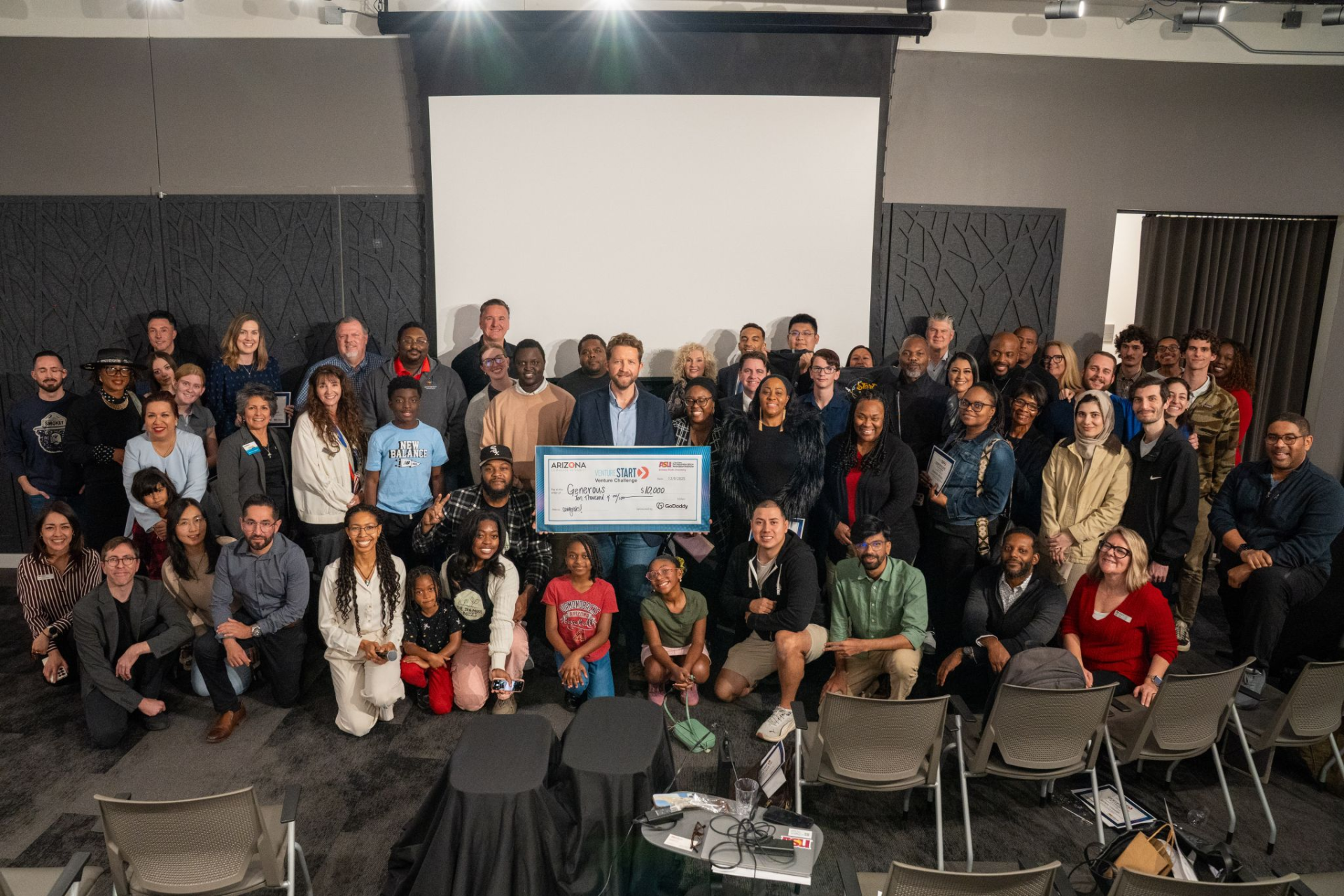
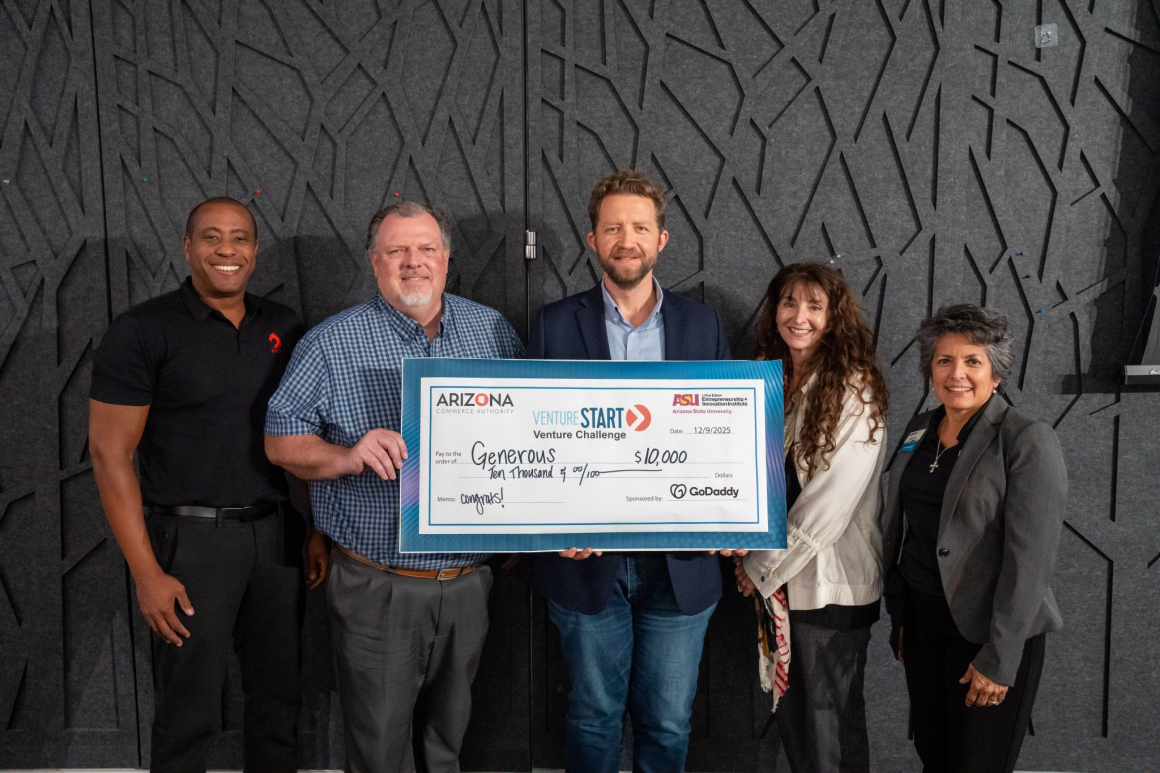
At the Venture Challenge Showcase, held during the cohort’s final session on December 9, 2025, Generous was awarded the top honor, receiving a $10,000 seed grant donated by GoDaddy. The applause was immediate and generous, reflecting not just a winning pitch, but respect for the work behind it.
In total, 67 founders graduated from the Venture Start Fall 2025 cohort. Participants who comple ted all six sessions were formally recognized as Venture Start Founders, receiving certificates presented in front of local experts, funders, and ecosystem supporters. Five startups earned the opportunity to pitch live for seed funding during the showcase.
The judging panel—Robert Theobald, Cecilia Ashe; Kenny Williams; and Linda Ricchiuti offered feedback that was thoughtful, direct, and grounded in real-world experience.
The goal wasn’t to crown perfection, but to prepare founders for what comes next.
And then, in a moment no agenda could have planned, the room founders, judges, and guests broke into a full rendition of “The 12 Days of Christmas.” All twelve verses. No hesitation.
Later, reflecting on the experience, Hedrick described the cohort simply: gratitude for the team, for the founders, and for what was created together. Pure joy.
Why It Matters
Venture Start wasn’t about speed for speed’s sake. It was about building the right foundations before scaling. It showed what happens when community, preparation, and opportunity align. Founders were given both structure and room to grow. Programs like this don’t happen by accident.
They require partners willing to invest locally, institutions willing to try something new, and founders willing to show up before they’re certain.
Venture Start Cohort #2 launches Spring 2026, building on the same foundations of rigor, care, and community that defined this fall.By the time the room emptied, the pitches were over but the work, and the community formed around it, was clearly just beginning.





29 comments
References:
Online casino usa
References:
skyscrapperwiki.site
References:
No deposit bonus binary options
References:
skitterphoto.com
References:
Slot machine strategy
References:
headlinelog.site
References:
Craps betting strategy
References:
http://www.qazaqpen-club.kz
References:
Titan casino mobile
References:
chesswiki.site
References:
Bicycle club casino
References:
stackoverflow.qastan.be
References:
Skykings casino citytoads.com
References:
Casino phoenix az graph.org
References:
Ac online casino clipjournal.site
References:
Casino michigan
References:
medibang.com
References:
Best roulette bets
References:
http://www.udrpsearch.com
References:
Walking dead time slot myreadinglists.com
References:
Mobile casino action atomcraft.ru
References:
Slot machine wins pad.geolab.space
References:
Latest casino bonus mensvault.men
References:
Casino websites doodleordie.com
References:
San francisco casinos argrathi.stars.ne.jp
References:
Internet casinos casey-arthur-3.thoughtlanes.net
References:
Australian online casino http://www.24propertyinspain.com
Einzahlungen per E-Wallet und Krypto werden in der Regel sofort verarbeitet, während
Kartenzahlungen bis zu 24 Stunden dauern können. Das ist gesetzlich
vorgeschrieben und schützt gleichzeitig das eigene Konto vor
unbefugtem Zugriff. Einfach auf Jetzt registrieren klicken, die persönlichen Daten eingeben, E-Mail bestätigen – fertig.
Wer auf Nummer sicher gehen will, ist bei NV Casino gut
aufgehoben. Unser Willkommensbonus gibt es direkt beim ersten Einzahlen – kombiniert
mit einem starken Spielangebot aus den Bereichen Slots, Live-Casino und mehr.
Im Jahr 2026 haben 98 % von 5000 deutschen Nutzern den Prozess erfolgreich abgeschlossen und sofortigen Zugang
zu über 8200 Casinospielen, einschließlich Spielautomaten und Live-Tischen, erhalten. Führen Sie diese Schritte aus, um sofortigen Zugang zu unserer NV
Casino Plattform zu erhalten und erstklassige Casino-Boni zu genießen.
Starten Sie jetzt und sichern Sie sich sofort das Willkommenspaket von bis zu 2.000 €
+ 225 Freispielen! Dies schützt vor Betrug und hält die Spielumgebung sicher.
NV Casino schützt Ihre Daten mit starker SSL-Verschlüsselung und sicheren Zahlungsmethoden.
Mit dem NV Support Casino Login können Sie in diesem Fall ganz einfach auf “Passwort vergessen” klicken und
per Mail oder Telefonnummer Ihre Identität bestätigen. Mach dich bereit,
tausende von Spielen zu erkunden, großzügige Belohnungen zu beanspruchen und die ultimative
Unterhaltungsplattform zu erleben.
Diese Grenzen schützen Ihr Budget und halten das Spielen sicher.
NV Casino bietet mehrere Optionen für Spielpausen und Selbstausschluss
direkt in Ihrem Konto. Verantwortungsvolles Spielen schützt
vor Spielsucht und finanziellen Problemen. Jeder Spieler kann sein Spielverhalten durch persönliche Limits kontrollieren. Die Tools für bewusstes Glücksspiel
unterstützen eine sichere Spielumgebung.
Wählen Sie eine Zahlungsmethode aus den verfügbaren Optionen wie Visa oder Mastercard, Skrill, Neteller, Paysafecard,
MiFinity, Banküberweisung oder Kryptowährungen wie Bitcoin. Durch die Verifizierung der
Konten stellt das NV Casino sicher, dass seine Plattform vertrauenswürdig und verantwortungsbewusst bleibt.
Klicken Sie auf “Zahlungsmethode hinzufügen” und wählen Sie Ihre bevorzugte Option aus.
Sie können aus Kredit-/Debitkarten, E-Wallets wie Skrill und Neteller oder
Kryptowährungen wie Bitcoin und Ethereum wählen. Sobald
Sie Ihren Benutzernamen gewählt haben, klicken Sie auf die
Schaltfläche “Konto verifizieren” in den Profileinstellungen. Dieser Prozess umfasst die Bereitstellung von Ausweisdokumenten und einen Adressnachweis.
Klicken Sie auf “Profil bearbeiten” und wählen Sie dann das Feld “Benutzername”.
Willkommen bei NV Casino – Ihrem sicheren Portal für
Premium-Gaming! Sie können Freispiele erhalten oder einen Bonus ohne Einzahlung bekommen. Das Casino bietet viele sichere Zahlungswege für alle
Spieler. Statt auf E-Mail-Antworten zu warten, können Nutzer sofort Lösungen finden. Unsere freundlichen Mitarbeiter helfen bei allen Fragen und sorgen für ein sicheres Spielerlebnis.
Mein Account-Manager hat mir letzten Monat einen Reload-Bonus angeboten, bevor ich überhaupt danach gefragt habe
— das ist das Niveau, das ich nach zwei Jahren als VIP-Spieler erwarte und das hier auch tatsächlich geliefert wird.
Der Kundendienst von Nv Casino Mindesteinzahlung
Casino ist rund um die Uhr über den Live-Chat erreichbar, der direkt auf der Website zugänglich ist – ideal, wenn du als Neuling schnell eine Frage klären möchtest.
Den Bonus aktivierst du direkt bei der ersten Einzahlung, indem du den entsprechenden Bonuscode oder die Bonusoption im Kassenbereich auswählst.
Beim NV Casino beträgt die Mindesteinzahlung für Bonusangebote nur 10 Euro,
und es gibt sogar einen No-Deposit-Bonus, sodass du das Casino zunächst völlig ohne Einzahlung ausprobieren kannst.
Alle Bonusangebote und Spieloptionen finden Sie auf der NV-Hauptseite.
Neue Spieler, die KYC innerhalb von 48 Stunden abschließen, erhalten einen 20 € Bonus ohne Einzahlung auf ausgewählten Pragmatic-Titeln. Registrieren Sie sich heute und sichern Sie sich ein Willkommenspaket von bis zu €2.000 + 225 Freispielen. Das einzige, was ich mir noch wünschen würde, ist eine bessere Filterung
im Spielekatalog, weil man sich da am Anfang schon etwas durchklicken muss.
Die Hilfe-Center-Artikel behandeln Bonusregeln, KYC, Zahlungs-Troubleshooting
und Kontosicherheit. Klicken Sie auf „Registrieren”, wählen Sie einen Benutzernamen, geben Sie eine gültige E-Mail-Adresse ein und wählen Sie ein sicheres
Passwort. Falls eine dedizierte App verfügbar ist, findest du
den entsprechenden Download-Link direkt auf der Website des Casinos.
Sportwetten sind ebenfalls direkt über die Hauptnavigation erreichbar, sodass
Casino und Wetten bequem auf einer Plattform verfügbar sind.
Wir bieten plattformeigene Tools, mit denen Spieler ihr Spielverhalten aktiv kontrollieren können. Diese Seite dokumentiert alle sicherheitsrelevanten Mechanismen — von der Zwei-Faktor-Authentifizierung über KYC-Prozesse bis hin zu Phishing-Erkennung — präzise und ohne Marketingsprache.
Die folgende Tabelle zeigt alle sicherheitsrelevanten Punkte auf einen Blick.
References:
Casino darwin moiafazenda.ru
References:
Dakota sioux casino pad.stuve.de
References:
Instant Casino Treueprogramm
References:
jobs.emiogp.com
References:
Instant Casino Willkommensbonus
References:
bridgedesign.site
References:
Fitz casino tunica eggswiki.site
References:
Play online racing games ancientroman.space
References:
Sbg global mobile is.gd
References:
Fruit machine games 24propertyinspain.com
References:
Instant Casino mobile spielen
References:
md.chaosdorf.de