The sound of a revolution doesn’t always start with a shout; sometimes, it’s just the steady, rhythmic clicking of sixty people typing at once in a midtown Phoenix office. Most tech events are “sit back and listen” affairs dry PowerPoints and cold coffee. But at the AI Collective, the rule is different: if you didn’t bring your laptop, you’re missing the point.

“We’re tired of the lectures,” Anisia Corona tells me as we sit down for the Inside the Ascent podcast. “Personally, I like to do more hands-on than just go to an event where it’s networking or listening to a lecture. We want you to walk out knowing something.”
From a San Francisco Apartment to the Phoenix Heat
The AI Collective didn’t start in a boardroom. It began as a small, curious group of friends huddled in a San Francisco apartment. The AI Collective’s mission is driven by the belief that “meaningful connections emerge through shared curiosity. Today, that curiosity has scaled into a global community of 150,000 pioneers. But for Anisia, who splits her time between the Bay Area and Arizona, the goal was to bring that “builder” energy home.
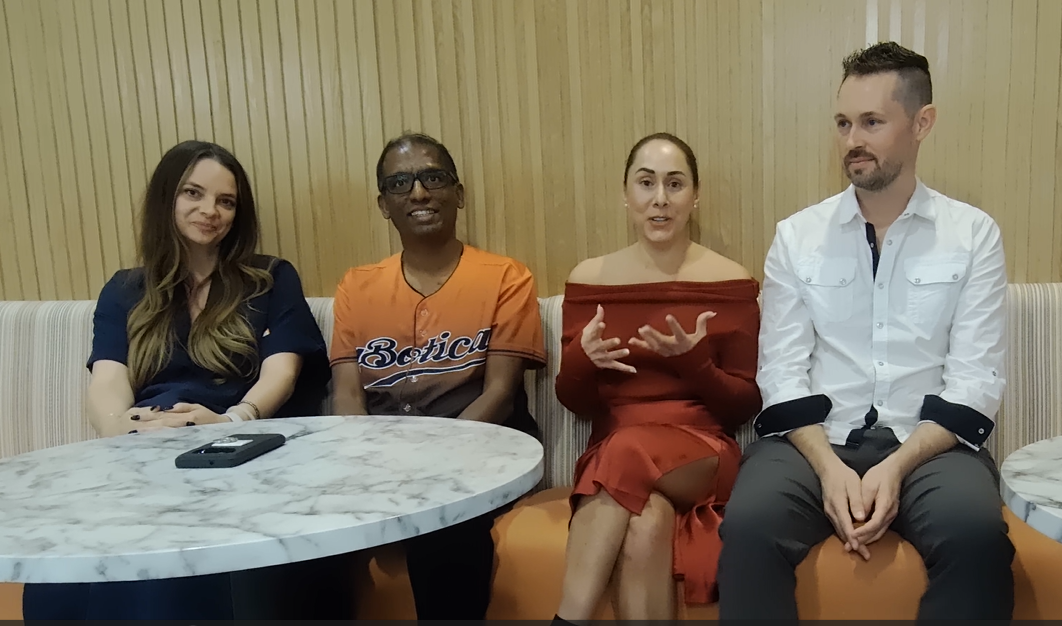
“Being involved in the San Francisco community, I was able to see some of the events that just weren’t happening here in Arizona,” Anisia explains. She found an immediate partner in Rob Andersen, a software engineer with an obsession for fixing what he calls“Identity Chaos.”
Rob isn’t your typical executive; he’s the man behind AntiSpamGuy. His mission was sparked by a viral TikTok moment that turned out to be a “delusion” caused by bots. “My main interest is to help make it so that AI is something that people can trust,” Rob says.
He’s spent the event helping people build “Identity Agents” essentially good bots that act on your behalf. “We want you to be able to install it and use it… in your business or personal life.”
The Responsibility of Being First
While the room is full of screens, the conversation is surprisingly civic-minded. Mahesh Vinayagam, an 18-year Arizona resident and CEO of qBotica, sees this movement as a matter of duty. For him, Arizona’s tech growth isn’t a marketing slogan; it’s a challenge that requires the state to act now.
“I think the state is really right now fully set up to launch forward into a powerhouse within the country,” Mahesh asserts. He doesn’t just talk about the future; he’s building the pipeline for it through his work with the Department of Education and the FBLA. “I also have a responsibility to really help the state get forward… and get Arizona on the map of AI across the board.”
When the Work Becomes Personal
For Caia Taback, the mission is about making sure technology actually serves the people it claims to help. Caia has spent nearly twenty years scaling health-tech platforms like Fullscript, but she joined the The AI Collective because she saw a chance to bridge the gap between “tech people” and “care people.”
I was really drawn to find solutions that [people] can then bring back and use for the betterment of their personal lives or their professional lives,” Caia says, watching the full room of builders.
This mission hits home for Anisia. In 2020, after running a half-marathon, she was hit with a chronic illness that forced her to see the healthcare system as a patient, not just an executive. “I saw the gaps firsthand,” she says. Now, through her company DxTx, she is building AI curricula for medical schools to ensure that when a student becomes a doctor, they have the tools to avoid burnout.
The New Standard
As the session winds down, the energy doesn’t fade. You see people huddled over screens, troubleshooting a line of code or a new automation workflow. They aren’t just networking; they are collaborating.
The AI Collective is proving that Arizona’s growth isn’t just about building, it’s about the people actually doing the building. By bringing together thinkers like Anisia, Rob, Mahesh, and Caia, they are ensuring that Arizona is a place where the future isn’t just talked about: it’s written.